Diy Mini Lazy Susans

Before you go any further you need to know I had every intention of making this the most entertaining post in the history of my blog.Then I got sleepy. And now I’d like to have a nap. So instead, this is going to be the least wordy post in the history of my blog.This is more of one of those informative type posts anyway so you should be fine with the lack of all redeeming value, other than the information.If you’d like to be entertained today, might I suggest throwing rubber snakes at your neighbours.Onto the information!If you’re on the hunt for a large, good quality Lazy Susan you’re out of luck. There are no Susans, lazy or otherwise to be found anywhere.
You can select from the vast amount of plans available in the free Small Lazy SUSAns For Table woodworking plans online, which are offered by expert and experienced woodworkers. If you are beginner and very interested in doing a DIY project for home then, Small Lazy SUSAns For Table can be interesting. 10 Awesome Ideas for Using DIY Lazy Susans. Don’t forget these clever ideas, too! For painting furniture – Just set a piece of furniture on the lazy susan and rotate the furniture for easy painting on all sides without you having to get up and move around. The lazy way to paint furniture!
Lazy Susans Lewes
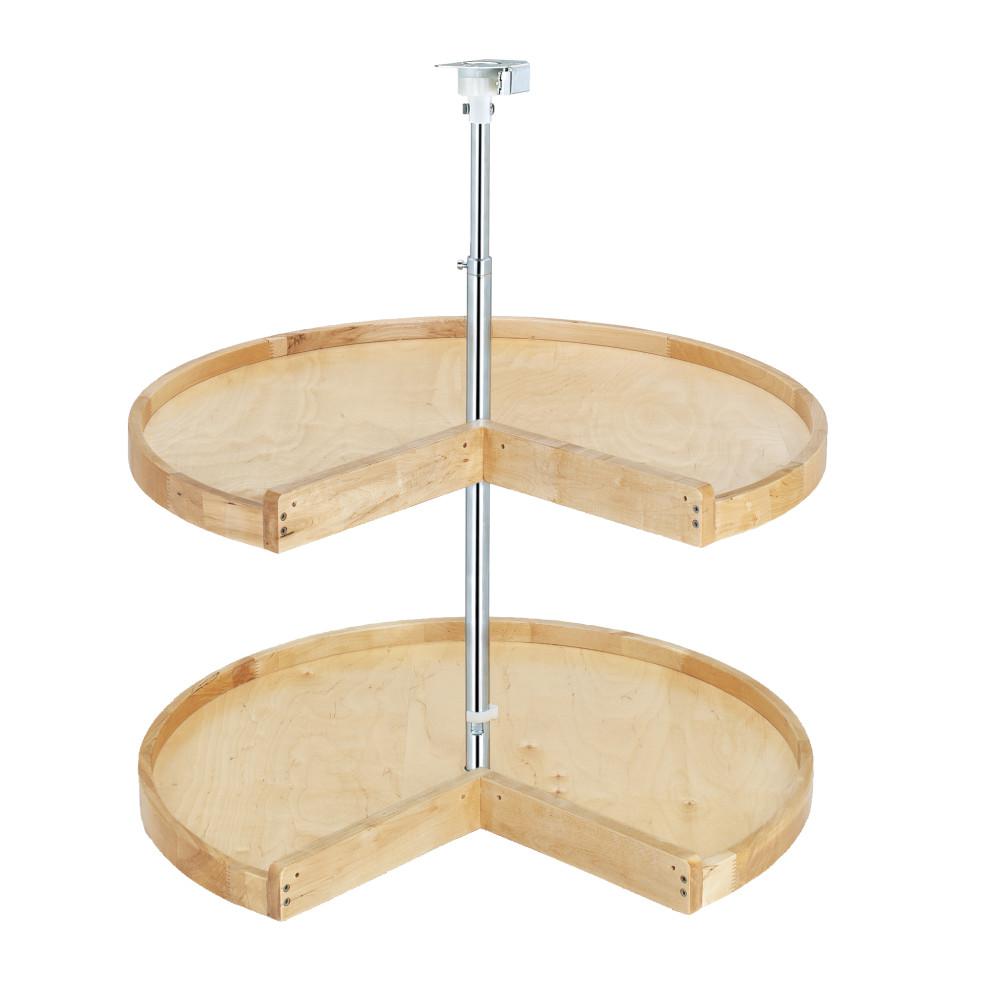
Stores like Lowes and Home Depot carry the HUGE stacking Lazy Susans that go in base cabinets, but no one carries a regular Lazy Susan. There are a few tiny plastic models around that you might use in your refrigerator but nothing for big cabinets.I told you a couple of weeks ago that I’d show you how to make your own custom sized Lazy Susans and even though I am a notorious liar, this wasn’t one of my lies.The best part is it’s incredibly easy to do and very, VERY affordable.The larger Lazy Susan mechanisms (bearings) are round, and more expensive ($9) than the smaller, square ones ($4). You can get away with the smaller, square mechanism for pretty much as big a Lazy Susan as you’ll ever need.
The larger one however will make your Lazy Susan more stable if you choose NOT to screw it to your surface. On other words to your countertop, tabletop or cabinet shelf.Basically what you’re going to do is measure your cupboard to see how big a Lazy Susan you can fit into it, cut that sized circle out of a piece of MDF, prime it, paint it and attack the Lazy Susan bearing onto the bottom. Easy, right?Here it is in pictures I’m not kidding about the.
They make the best jigsaws around and if you’re looking to buy one, spend the extra money and get a Bosch.In case the pictures were a bit confusing (and it is confusing until you make your first one) let me know and I’ll explain whatever you need to be cleared up.The point of the big screw hole (the access hole) is so once your Lazy Susan is in place on the shelf, you have a little hole to fit your screwdriver through so you can screw your Lazy Susan mechanism to the base of your shelf. Dry wood in thge oven. It seems confusing and weird but once you do it yourself with the help of these instructions you’ll see that it all makes sense.I took these pictures outside on my patio table because the lighting was better and there was more room. I was pretending to screw the Lazy Susan to my patio table, but in fact you wouldn’t be doing that, unless you wanted a Lazy Susan in the middle of your patio table. (but don’t do it with MDF MDF will NOT do well outside).
You would be screwing the Lazy Susan onto the shelf in your cupboard.The round Lazy Susan mechanism gets attach in a similar way, but not exactly the same.And that’s all there is to it. I made 7 of these for my kitchen. The cost of each will be slightly less than $8 for you if you make smaller Lazy Susans.Now speaking of lazy, it’s time for that nap.shareaholic app=”sharebuttons” id=”5342563″. JF – not sure exactly what kind of lazy Susan you might have but we fixed one installed at our cottage. It involved the centre pole and two shelves. The pole needs to rotate in its pivot points and the two shelves were attached to the centre pole with a screw that locked them into place. Failure at either point results in poor function.
However, fixing the damned thing (poorly) involved actually getting into the cupboard and messing around with the parts. These things are put in before the countertops go on which makes access much easier. If you can’t climb into the cupboard (contortionists here we come!), the axe might be your answer. I cannot tell you how many Lazy Susans I find at garage sales. I cannot tell you, because I never counted, but almost every garage sale around here seems to have one or more, and I’ve been going to garage sales around here for a decade.
They might be the smaller two-tier plastic ones, or very large single wood ones. I buy most of them, and find a use for them somewhere, like in the upstairs hall closet for first aid supplies, or my craft table for art supplies, or the top of the refrigerator so I can just whirl it around to get the potato chips or the crackers that are kept up there, or in the garage on the work bench, for nails and screws of the size we normally use.
Diy Mini Lazy Susan
They cost anywhere from $1 for the very large wooden ones to 10 cents for the single tier plastic ones. Just a bit of information about where to find Lazy Susans, from another Lazy Susan. Love your Lazy Susans, Karen! I would imagine they will make it much easier to retrieve things from those big, deep cabinets! Your instructions are great but I tried to print instructions, some of the pictures do not fit even on an 11×17 page when I copied from your site. I tried to print directly from your site and because some pictures are grouped as ONE picture, they still don’t fit on a page and I can’t see ALL the pics. Unfortunately, I do NOT have a computer outside to refer to as I’m cutting and that’s why I needed to print out instructions.
Guess i’ll have to pass on using your instructions to make my lazy susans. Just thought I’d let you know so that in the future, you might not want to group several pics into one when posting. The first couple of pics are separate pics. Karen:In your research on designing a lazy susan, did you come across any recommendations about load distribution for a larger circular platform? For instance, I am designing a 36″ lazy susan for a telescope chair that will be designed to hold up to 1000 lbs. I assume that it would be best to use a lazy susan bearing that is near the outer edge, lets say at 30″, and another one nearer the center, lets say a 12″ lazy susan bearing. I was just wondering if you had come across any recommendations or rules of thumb on designing for weight bearing/weight distribution for larger devices?Thanks,Leo.